Both are Pilates. The difference is where the resistance comes from, and what that lets an instructor do for you.
On a mat, the resistance is your own body against gravity. It is portable, it is cheap, and it is unforgiving in one specific way: the exercise is as heavy as your body makes it, and it cannot be made lighter for a shoulder that will not go there yet.
A sprung carriage that slides on rails. Springs are added or taken away, so the same exercise can be made lighter for somebody rebuilding after surgery and heavier for somebody who has been at it for years — in the same class, in the same minute.
It also holds you in position. That is why people who cannot yet find a movement on the floor often find it immediately on a reformer.
The Wunda Chair is the reformer’s short, upright cousin: the same springs, worked sitting and standing, and much harder than it looks.
The ladder barrel is a curved wooden barrel with a ladder at one end. It is the piece for spines that spend the day at a desk — extension, side bending, and hamstrings.
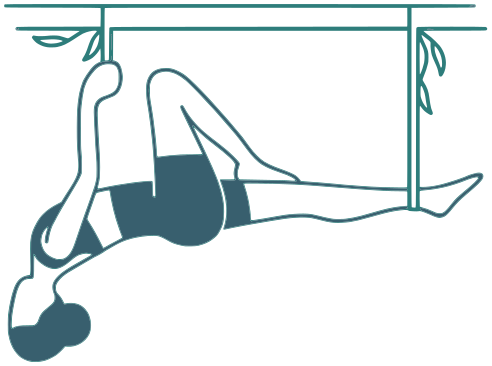
The Cadillac is a table with a frame over it. It is the most adjustable piece in the room, and because the studio has one it is always one person and one instructor.
The reformer, almost always. It is the piece with the widest range between easy and hard, and the small group means the instructor is correcting four people rather than twenty.